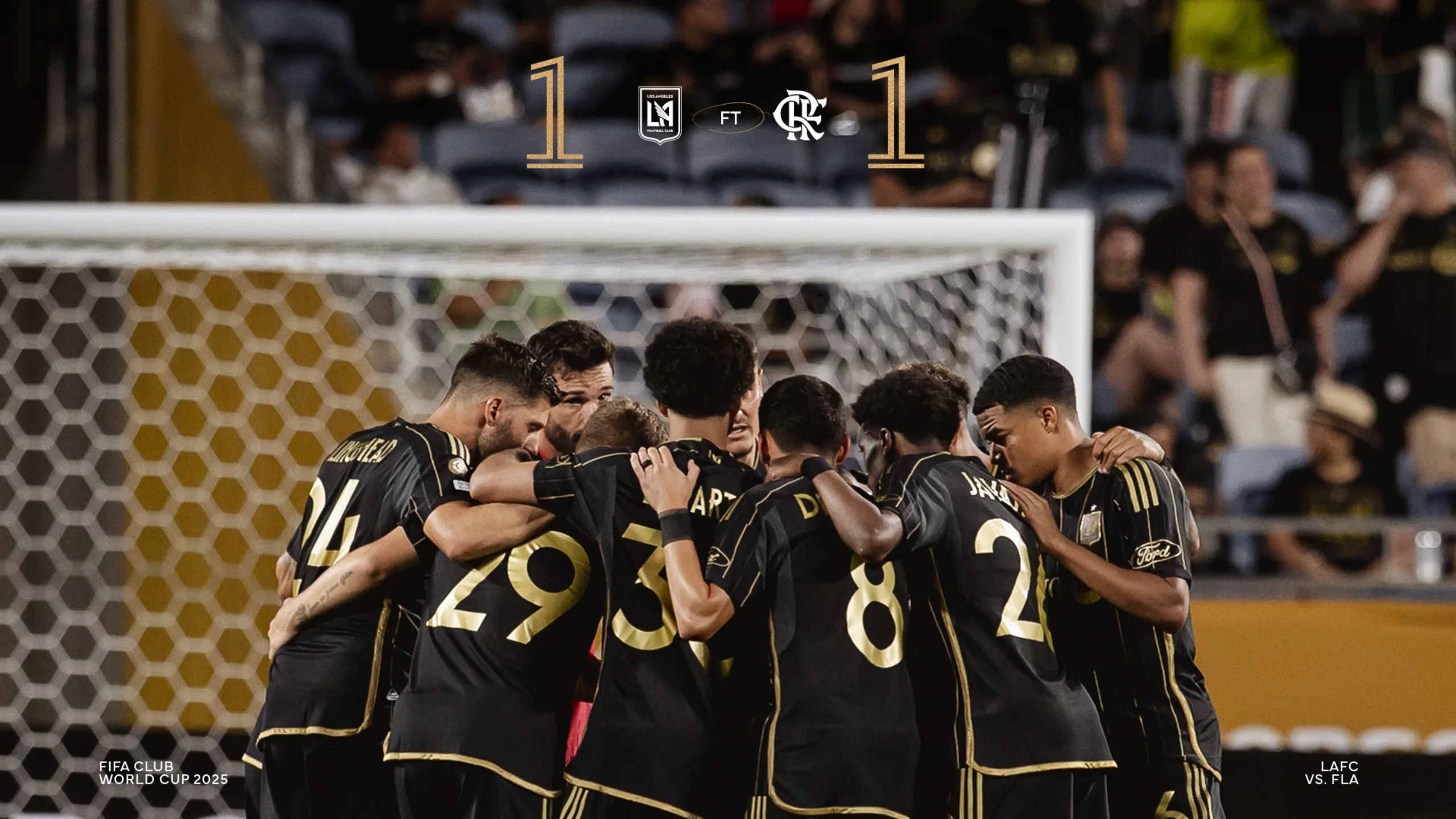
The Moment, the Mirror
The 2025 FIFA Club World Cup was supposed to be a signal.
A chance for MLS clubs to show the world—not just that they’ve grown, but that they can now contend. LAFC arrived as the league’s sharpest project: a team with identity, infrastructure, and a vision that has come close—repeatedly—to touching silver at the highest levels. They didn’t need to win the tournament. But they needed to show up.
Instead, they bowed out without a single victory. Not a disaster. But not a statement, either. If anything, it felt like a pause. A moment that froze LAFC—and MLS—between what they say they are, and what the world sees.
What Was Missing
There were glimpses. Denis Bouanga’s goal against Flamengo was a reminder that talent exists on this squad. Hugo Lloris looked like the World Cup winner he is, holding a shaky back line together with elite presence. Tactically, LAFC kept their shape and didn’t fold. But the pattern was familiar: good intentions, poor conversion. Solid structure, no surge.
Against Esperance, LAFC controlled the first half, then collapsed.
Against Chelsea, they looked present, but not dangerous.
Against Flamengo, they punched once—and were immediately punched back.
There was no killer instinct. No second wind.
No sense of taking the moment by the throat.
This wasn’t a team outclassed in spirit. It was a team edged out in the margins—where depth, pace, experience, and budget come to bear.
A Wider Pattern
And it wasn’t just LAFC.
Seattle Sounders, the first MLS team to reach this modern Club World Cup format, were also eliminated early. Respectably, but quietly. They, too, carried the league’s hopes into an international arena, and left without shifting the narrative.
The pattern is clear: MLS clubs are capable. Structured. Disciplined.
But when the pressure rises and the talent gaps widen—they bend.
These aren’t emotional collapses.
They are structural truths.
Inter Miami: The Outlier, or the Blueprint?
While LAFC exited, Inter Miami climbed into the Round of 16.
Led by Lionel Messi and his long-time compatriots Alba and Suárez, Miami have embraced their global moment. And yes, there’s star power. Yes, it’s a constellation unlike any MLS roster has carried. But they are also playing with purpose, pressing with belief, and bringing results against clubs like FC Porto—whose squad is valued at nearly €250 million.
Inter Miami’s roster is estimated around $36 million—more than LAFC’s $15M, but still a fraction of what most of their opponents carry. They’re not outspending Europe. But they are out-believing much of MLS.
They’re showing what can happen when an MLS club chooses to behave like a contender instead of a participant.
When it stops apologizing for ambition.
When it decides to bend the model instead of bow to it.
The Numbers Don’t Lie
Let’s look plainly:
– Inter Miami: ~$36M
– Seattle Sounders: ~$23M
– LAFC: ~$15M
– Flamengo: €219.15M
– Chelsea: €870M
– PSG: €1.02B
– FC Porto: €250M
It’s not just a gap. It’s a canyon.
And MLS keeps sending teams across it in sneakers.
Cherundolo’s Honesty
Before their final match, LAFC head coach Steve Cherundolo didn’t sugarcoat it:
“I mean, the obvious fact, and I don’t have a problem being honest, the payroll of Chelsea is $200 million and ours is $12. In our sports, money makes a difference.”
It was the most important quote of the tournament.
Not because it excused the result. But because it named the tension: MLS can’t expect international results while restricting domestic ambition.
The league was built on balance, parity, franchise stability—and in many ways, it has succeeded. But globally, football is built on dominance, on freedom, on creative spending, on massive youth investments, and relentless competition for every edge.
Parity is a noble idea.
But it cannot be a wall MLS hides behind.
Not if it wants to stand tall next to the rest of the world.
As 2026 Approaches…
The timing matters. The World Cup is coming. North America is hosting.
Eyes are already here.
And what they’ve seen so far is this: MLS can hang for a half. It can frustrate elite teams. But it doesn’t finish. It doesn’t break games open. It doesn’t yet strike fear.
If LAFC was meant to be the model, they offered something else instead: a warning.
That infrastructure, identity, and intention aren’t enough without evolution.
LAFC’s Club World Cup run wasn’t a failure. It was a reflection. Not of a team unworthy—but of a league still figuring out who it wants to be when the rest of the world is watching. And in that mirror, maybe it’s time MLS stopped asking if it belongs—and started building like it does.


 chandrimac
 Pola Henderson
 De LA pal mundo es mi inspiración ⚽️🌌