In Los Angeles, even a rivalry this bitter can’t drown out the city’s pulse.
For the third time this season, El Tráfico delivered chaos, drama, and the unmistakable energy of a city split by colors but united by soul. LA Galaxy, bottom-dwellers of the Western Conference experiencing their worst season in an illustrious history while also reeling from alienating their own fan base months after hoisting the MLS Cup, looked poised for yet another defeat. But in typical El Tráfico fashion, the improbable happened. A 3-1 LAFC lead dissolved into a 3-3 draw by the final whistle. A controversial red card, fraying emotions, and two late Galaxy goals—including a stunning 97th-minute header from Maya Yoshida—flipped the narrative yet again.

Because that’s what El Tráfico is: a script perpetually ripped up and rewritten.
The night belonged to the dramatists. LAFC’s Denis Bouanga extended his electric El Tráfico form, netting twice to become the first player to score in six consecutive editions of the derby, surpassing Zlatan Ibrahimović’s legacy in the rivalry. Yet even Bouanga, watching helplessly from the bench after his substitution, was left “disgusted” by the late collapse. “For me, it’s like a defeat,” he admitted post-match. LAFC had answers in attack but couldn’t hold the line defensively, especially after Eddie Segura’s red card reduced them to ten men. Galaxy’s Gabriel Pec kept his side in the game with a brace, but it was Yoshida’s last-gasp flicked header, assisted by Mauricio Cuevas, that sent shockwaves through BMO Stadium—just seven seconds before time expired.
But this year, this match, it was about more than just the scoreboard.
Los Angeles, as a city, is pulsating with repercussions of a heated national political landscape that scoffs at diversity. The recent ICE raids have haunted neighborhoods, disrupted homes, and targeted immigrant families. This isn’t abstract politics—this is lived reality for many who fill BMO Stadium and Dignity Health Sports Park. The tension in the city is palpable, and yet the supporters showed up, chanting not just for their teams but for their people.
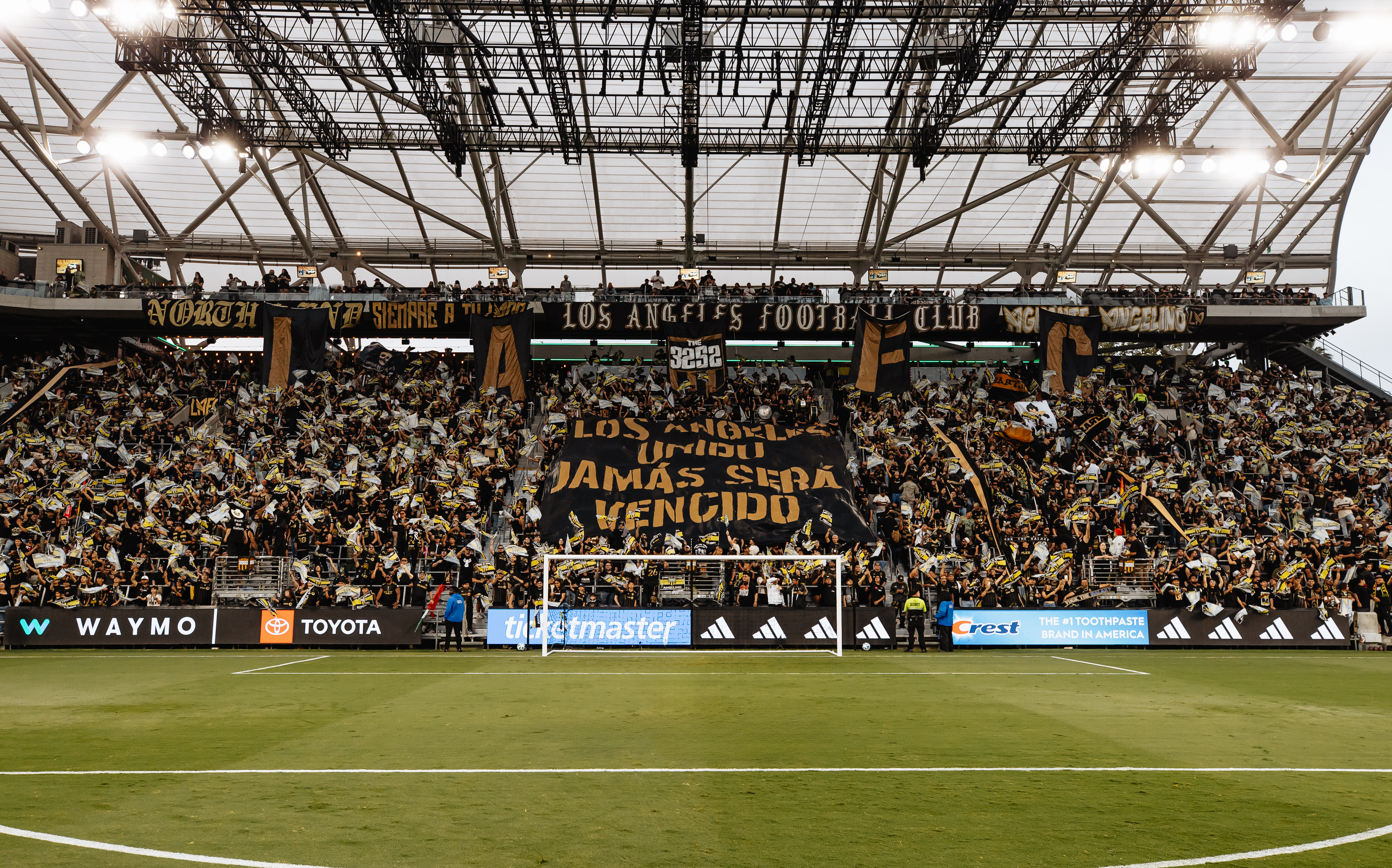
The unified LAFC supporter group, the 3252, unfurled a TIFO that read, “Los Ángeles Unido Jamás Será Vencido” — Los Angeles United Will Never Be Defeated. It was a message aimed beyond the pitch, a statement of defiance against the fear and fragmentation that the raids have sought to impose.
The Galaxy’s own fan base, however, has faced a chilling silence from their club. Earlier this month, the team banned a long-time member of the Angel City Brigade, one of the Galaxy’s most vocal supporter groups, for unfurling a banner at Dignity Health Sports Park that condemned ICE raids and the team’s public silence. Additional fans were suspended for allegedly harassing Galaxy management in the aftermath. The bans have only deepened the rift between the Galaxy front office and its passionate, socially conscious supporters, many of whom see their protest as inseparable from the soul of the city. Where the club remained quiet, its fans made noise—and paid the price for it.
This wasn’t the first time LAFC supporters made headlines in protest. Just last month, they staged a coordinated demonstration inside BMO Stadium during a match, holding signs and banners condemning ICE and the deportations terrorizing their communities. The protest gained national attention and made it clear that, in Los Angeles, soccer isn’t just a game—it’s a platform for resistance.
The scoreline was everything the two Los Angeles soccer communities, often hit by ICE, deserved. A reminder that even in rivalry, solidarity can pulse beneath the surface.
In that sense, the 3-3 scoreline is almost poetic. No victor, no vanquished—just a city, messy and defiant, refusing to yield. As LAFC head coach Steve Cherundolo put it, “These games are crazy. That’s the best way to describe them.” But the real craziness isn’t just in the goals and red cards; it’s in a city trying to stay whole while everything around it tries to pull it apart.
This isn’t just a soccer rivalry anymore. It’s a mirror of Los Angeles itself—fractured, fervent, and unwilling to back down.
In the end, LAFC and LA Galaxy fought each other to a draw, but the people of Los Angeles showed up to fight for something bigger. And that? That’s the real story of El Tráfico 2025.


 chandrimac
 Pola Henderson
 De LA pal mundo es mi inspiración ⚽️🌌